
Pre Leased Commercial Property Punjab : Why Smart Investors Are Looking Beyond Mohali & Zirakpur
Royals Property Consultant is a trusted name for buying, selling, renting, and investing in residential and commercial properties in Zirakpur, Mohali, Chandigarh, and New Chandigarh.

Why Smart Investors Are Looking Beyond Mohali & Zirakpur for Commercial Property Investments
A close look at pre leased commercial property Punjab options, why market maturity changes the investment math, and why highway-facing commercial corridors are drawing a growing share of serious commercial capital in 2026.
Executive Summary
Commercial real estate in Punjab and the wider Tricity region has matured considerably over the past decade. Mohali and Zirakpur, once considered the emerging frontier, are now established commercial addresses with visible sector-road retail, organised SCO markets, and a deep base of resident and business demand. That maturity is a genuine strength — but it also changes the investment arithmetic for anyone evaluating pre leased commercial property Punjab options today. Entry prices in the most sought-after sectors have risen with demand, competitive bidding for premium units has intensified, and the pace of incremental appreciation in some well-established micro-markets has, understandably, moderated compared with their early growth years.
This is not a criticism of Mohali or Zirakpur — both remain sound, functioning commercial markets with genuine long-term value. It is simply how every maturing real estate market behaves, in Punjab or anywhere else. What this guide sets out to do is explain, with market reasoning rather than sales language, why a growing number of commercial investors — business owners, doctors, industrialists, NRIs, and retail investors seeking passive income — are now also evaluating developing highway commercial corridors as part of a diversified commercial portfolio. We’ll walk through how commercial property differs from residential investment, why location fundamentals matter more than the building itself, what “market maturity” actually means in practical terms, why highway corridors attract national retail and F&B brands, the real mechanics and risks of pre-leased commercial property, and what Punjab’s infrastructure and industrial policy pipeline suggests for 2026 and beyond. Toward the end, we’ll look at one highway-facing mixed-use project — Ananta Karvan on NH-21 — as a case study in how these principles apply in practice, without treating this as a sales pitch.
📋 Table of Contents
- Why Commercial Property Is Different from Residential Investment
- Why Location Matters More Than the Property
- Understanding Market Maturity
- Why Investors Are Exploring Beyond Traditional Commercial Hubs
- Highway Commercial Corridors
- Why Brands Choose Highway Locations
- Importance of Pre-Leased Commercial Property
- Infrastructure Creates Appreciation
- Punjab Commercial Real Estate Outlook
- Case Study: A Highway Mixed-Use Project
- Risks Every Commercial Investor Should Understand
- Investor Checklist
- Frequently Asked Questions
- Conclusion
Why Commercial Property Is Different from Residential Investment
Most first-time property investors start with residential real estate simply because it’s familiar — everyone understands buying a flat or a plot. Commercial property runs on a fundamentally different logic, and understanding that logic is the first step before evaluating any pre leased commercial property Punjab opportunity.
Rental Income
Residential rental yields in most Tricity micro-markets typically run in a modest low-single-digit range annually. Commercial property — retail, showroom, or F&B space in the right location — routinely commands meaningfully higher rental yields, because business tenants pay for footfall and visibility, not just square footage.
Lease Stability
Commercial leases are usually longer-tenure and more formally documented than residential rental agreements, often running three, five, or nine years with structured escalation clauses. This gives an investor more predictable, plannable income over a multi-year horizon.
Business Demand
Commercial space demand is driven by business expansion decisions — a retailer, restaurant chain, or clinic deciding to open a new outlet — which tends to be more deliberate and less impulsive than a household’s residential rental decision, but also more sensitive to catchment quality and footfall data.
Capital Appreciation
Well-located commercial property in a genuinely growing catchment can appreciate meaningfully as the surrounding population, business density, and connectivity mature — though appreciation is never guaranteed and depends heavily on location quality and market cycles.
Inflation Hedge
Structured lease escalations (commonly 5-15% at renewal, depending on the agreement) mean commercial rental income has some built-in inflation protection that a fixed residential rent typically lacks.
Passive Income
For doctors, industrialists, and business owners already occupied with a primary profession, a pre-leased commercial unit is one of the few real estate formats designed to generate income without requiring active day-to-day management — provided the underlying lease and tenant are sound.
Why Location Matters More Than the Property
In residential real estate, the specific unit — its layout, floor, and finishes — carries real weight in the buying decision. In commercial real estate, location fundamentals dominate almost everything else, because a commercial unit’s value is really a claim on the footfall and catchment around it.
Traffic
Vehicular and pedestrian traffic volume is the single strongest predictor of retail and F&B success — it’s the raw material footfall is made from.
Population & Catchment
The size, income profile, and growth trajectory of the residential and working population within a realistic drive-time radius.
Connectivity
Ease of access from multiple directions — highways, arterial roads, and public transport — expands the effective catchment a unit can draw from.
Brand Visibility
Frontage, signage sightlines, and approach-road visibility materially affect a retailer’s willingness to pay premium rent.
Accessibility & Parking
Ease of stopping, parking, and re-entering traffic flow directly affects whether passing traffic converts into actual footfall.
Future Infrastructure
Announced or under-construction connectivity and civic projects can materially shift a location’s catchment and value over a 3-7 year horizon.
This is precisely why serious commercial investors are trained to evaluate the road, the catchment, and the connectivity map before they ever look at a floor plan. A beautifully designed unit on a low-traffic internal road will almost always underperform a plain unit on a high-traffic, high-visibility frontage.
Understanding Market Maturity
Every real estate market moves through recognisable phases, and understanding which phase a specific micro-market is in helps set realistic expectations for both risk and return.
| Market Stage | Typical Characteristics | Investor Implication |
|---|---|---|
| Early Growth Market | Lower entry prices, developing infrastructure, limited existing footfall, higher execution risk | Higher potential appreciation, but outcomes depend heavily on infrastructure and demand actually materialising |
| Growing Market | Infrastructure largely committed or under construction, rising population and business density, moderate competition | Balanced risk-return; often the sweet spot investors look for |
| Mature Market | Established footfall, well-known addresses, higher entry prices, active resale market | Lower execution risk, but higher acquisition cost and typically slower incremental appreciation |
| Saturated Market | Limited fresh inventory, intense competition for available units, prices largely reflecting known, priced-in demand | Entry cost can outweigh remaining upside; differentiation and unit quality become critical |
Mohali’s core commercial sectors and Zirakpur’s Airport Road/VIP Road belt today largely sit between the “growing” and “mature” stages on this spectrum — which is exactly why they remain fundamentally sound markets, and also exactly why entry costs there have risen and available premium inventory has thinned relative to a decade ago. This is a natural market evolution, not a flaw in either city.
Why Many Investors Are Exploring Beyond Traditional Commercial Hubs
As established commercial hubs mature, several practical dynamics tend to emerge, and Punjab’s Tricity commercial market is no exception:
- Rising land and acquisition prices in prime, well-proven commercial sectors, driven by sustained demand over many years.
- Greater competition for the limited premium units that do come to market, often via auction or high-demand launches.
- Limited fresh premium inventory in the most established addresses, since land is largely already built out.
- Comparatively lower incremental appreciation potential in some already-mature micro-markets, simply because much of the growth story is already reflected in current prices — though this varies significantly by specific location and project quality.
None of this means mature markets are a poor investment — resale liquidity, proven footfall, and lower uncertainty are genuinely valuable, and many investors rightly prioritise those qualities. But it does explain, in plain market terms, why a segment of commercial investors — particularly those with a 7-10 year horizon and appetite for a somewhat higher risk-return profile — are actively researching developing corridors where infrastructure, population growth, and business expansion are still in earlier stages, as a way to diversify a broader commercial portfolio rather than replace exposure to established hubs entirely.
Highway Commercial Corridors: Why They Attract a Different Kind of Demand
Across India, national and state highways have quietly become some of the most consistently active commercial real estate corridors — not because of any single project, but because highways concentrate a category of demand that inner-city sector roads simply cannot replicate: continuous, high-volume, multi-directional traffic that exists independent of any one neighbourhood’s local population.
This is visible nationally in how specific business categories cluster almost exclusively along highway stretches:
Retail & QSR Chains
National food and retail chains routinely prioritise highway-facing sites for their combination of visibility and passing-traffic conversion.
Fuel Stations
Among the purest highway-dependent businesses, existing almost exclusively where continuous vehicular flow guarantees consistent demand.
Hotels & Hospitality
Highway-adjacent hotels capture both transit travellers and destination tourists passing through en route to hill stations or pilgrimage sites.
Hospitals & Healthcare
Highway-facing healthcare facilities benefit from wide catchment access across multiple towns, not just one local population.
Education
Institutes often choose highway-adjacent land for larger campus footprints combined with multi-town accessibility.
Logistics & Warehousing
Freight movement is inherently a highway-dependent activity, driving industrial and logistics parks toward these corridors.
India’s own highway investment trajectory supports this trend structurally. National highway length has grown roughly 60% over the past decade, and the Union Budget 2026-27 allocated over ₹3.09 lakh crore to the Ministry of Road Transport and Highways alone — a clear signal that highway-linked catchments will keep expanding in reach and traffic volume over the coming years.
Why Brands Choose Highway Locations
From a retailer or F&B brand’s perspective, the decision to lease highway-facing space usually comes down to a specific combination of factors that inner-city locations struggle to match simultaneously:
- Traffic and visibility: A highway frontage is visible to every vehicle passing, function as free, continuous advertising impossible to replicate on an internal sector road.
- Parking: Highway commercial developments are typically designed with generous parking, removing a major friction point for family and group visits.
- Expansion strategy: National chains often use highway locations as lower-risk expansion sites into new geographies before committing to expensive inner-city real estate.
- Destination shopping and weekend traffic: Highway retail captures a fundamentally different shopping occasion — the planned weekend or holiday outing — rather than routine daily errands.
- Family footfall: Highway-facing food courts, entertainment zones, and drive-thrus are increasingly designed around family stopovers during longer journeys.
- Tourism traffic: Corridors connecting metro regions to hill stations or pilgrimage circuits capture a seasonal but high-volume tourist traffic stream on top of regular local and business traffic.
Importance of Pre-Leased Commercial Property
A pre leased commercial property Punjab investment refers to a unit sold with an existing lease, or with a contractually documented rental/lease-guarantee arrangement already structured into the purchase — meaning the buyer starts earning rental income from possession (or, in some assured-return structures, even from booking) rather than waiting through an uncertain leasing-up period.
Immediate Rental Income
The most obvious benefit — a pre-leased unit removes the “will I find a tenant” uncertainty that new commercial buyers often underestimate.
Reduced Vacancy Risk
With a lease already in place or contractually guaranteed for a defined period, the buyer is insulated from vacancy risk for that period — a meaningful advantage in a commercial category where vacancy is one of the biggest drags on realised returns.
Professional Tenants
Pre-leased arrangements, particularly in larger mixed-use developments, are more likely to involve established brands or professionally managed tenants rather than unverified individual lessees.
Better Financing Appeal
Lenders often view income-generating, pre-leased commercial assets more favourably than vacant commercial shells, since the documented rental income supports serviceability of any loan taken against the property.
Long-Term Wealth Creation
Combined with potential capital appreciation, a pre-leased commercial unit can serve as both an income asset and a growth asset over a multi-year holding period.
Diversification
For investors already holding residential property or market-linked instruments, a commercial income asset adds a different, less-correlated return stream to an overall portfolio.
Risk Considerations
Pre-leased or assured-return arrangements are only as strong as the paperwork behind them. Buyers should carefully review lease tenure, escalation clauses, the identity and financial strength of the guaranteeing entity, and what recourse exists if a rental or assured-return commitment isn’t honoured — treating any “assured return” language as a contractual commitment to verify with a lawyer, not a guarantee to take at face value.
Infrastructure Creates Appreciation
Across every real estate cycle in India, the single most reliable driver of long-term commercial appreciation has been infrastructure — not marketing, not branding, but physical connectivity and civic investment that expands a location’s effective catchment.
- Roads and expressways reduce travel time and widen the realistic catchment radius a commercial site can draw from.
- Industrial parks bring sustained daytime working populations and B2B commercial demand to surrounding areas.
- Residential projects nearby build the local consumer base that anchors day-to-day retail and F&B demand.
- Educational institutions bring a young, spending-active population and long-term footfall stability.
- Healthcare facilities draw consistent, non-discretionary visitor traffic throughout the year.
- Government investment in a region — via industrial policy, subsidy schemes, or infrastructure budgets — is one of the strongest forward-looking indicators of where commercial demand is headed next.
- Tourism activity along a corridor adds a seasonal but often high-value layer of footfall on top of resident demand.
Punjab Commercial Real Estate Outlook 2026
Punjab’s broader economic and infrastructure trajectory gives useful context to any pre leased commercial property Punjab decision. The state’s 2026-27 budget allocated roughly ₹12,597 crore toward road development and close to ₹3,500 crore specifically for rural infrastructure, alongside continued expansion of the state’s already road-dense network — Punjab’s road network density runs at roughly 1.75 times the national average, giving the state an inherent connectivity advantage.
On the industrial side, Punjab’s government rolled out its Industrial & Business Development Policy 2026, widening incentive eligibility for small and medium manufacturers and expanding the definition of qualifying capital investment — a policy shift aimed squarely at deepening industrial clusters around Ludhiana, Jalandhar, Batala, and Gobindgarh. Separately, a semiconductor manufacturing project worth roughly ₹4,594 crore was approved for Mohali under the India Semiconductor Mission, adding a new category of high-value industrial and employment activity to the Tricity’s economic base. The 2026 Progressive Punjab Investors’ Summit reportedly drew fresh investment pledges exceeding ₹25,000 crore across sectors.
For commercial real estate specifically, this combination — sustained road investment, an active industrial policy, and headline manufacturing investment — tends to support demand across multiple layers: industrial and logistics-linked commercial space, retail and F&B catering to a growing working population, and highway-facing commercial catering to inter-city and inter-state movement. Highway corridors linking Chandigarh and Mohali to Himachal Pradesh’s tourist circuit — including NH-21 toward Ropar, Kiratpur, and onward to Manali — sit at the intersection of this resident growth story and an independent, seasonal tourist-traffic stream, which is precisely the combination highway commercial developments are designed to capture.
Case Study: A Highway Mixed-Use Commercial Project in Practice
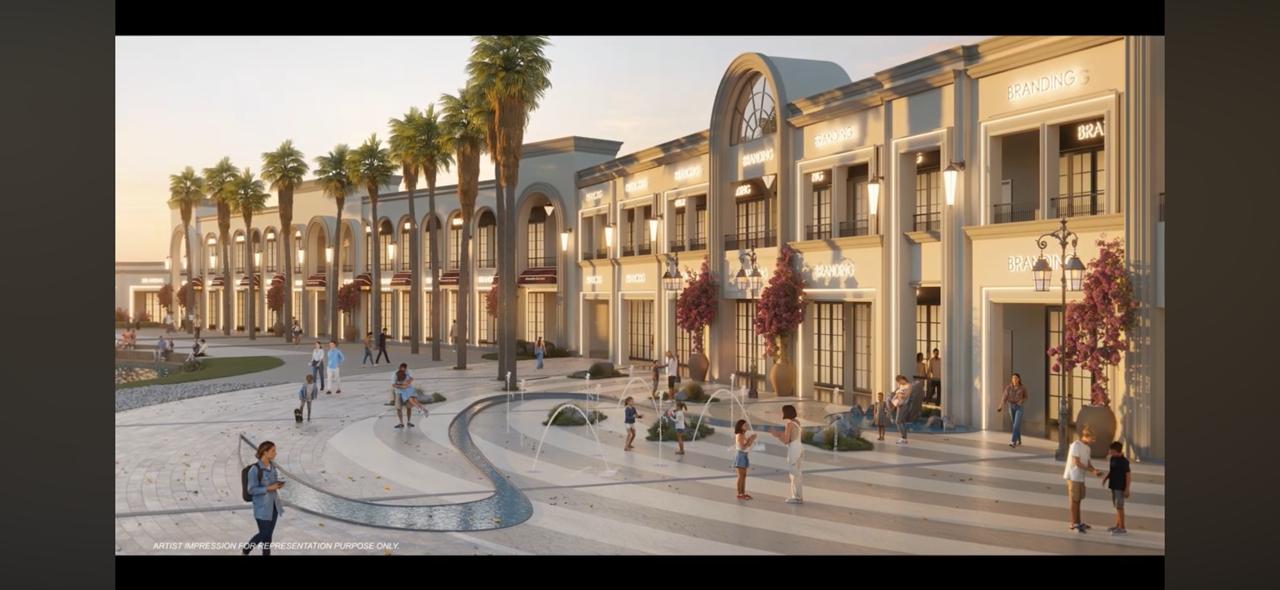
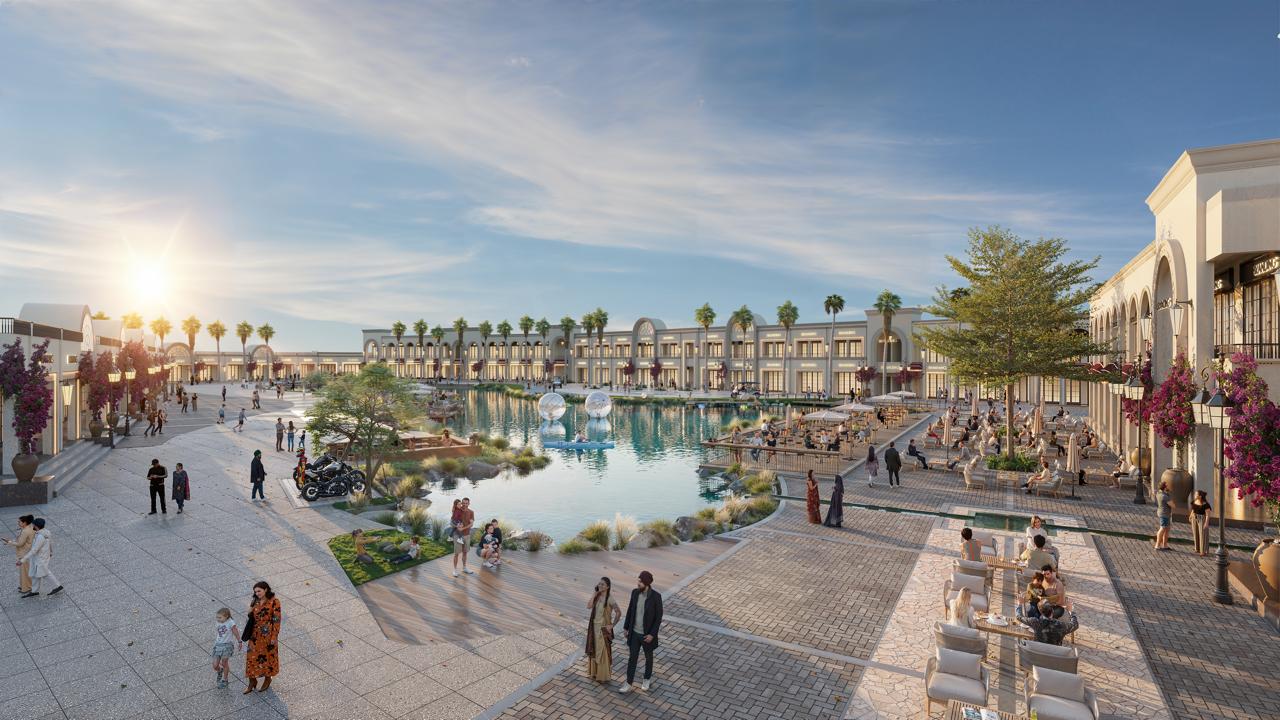
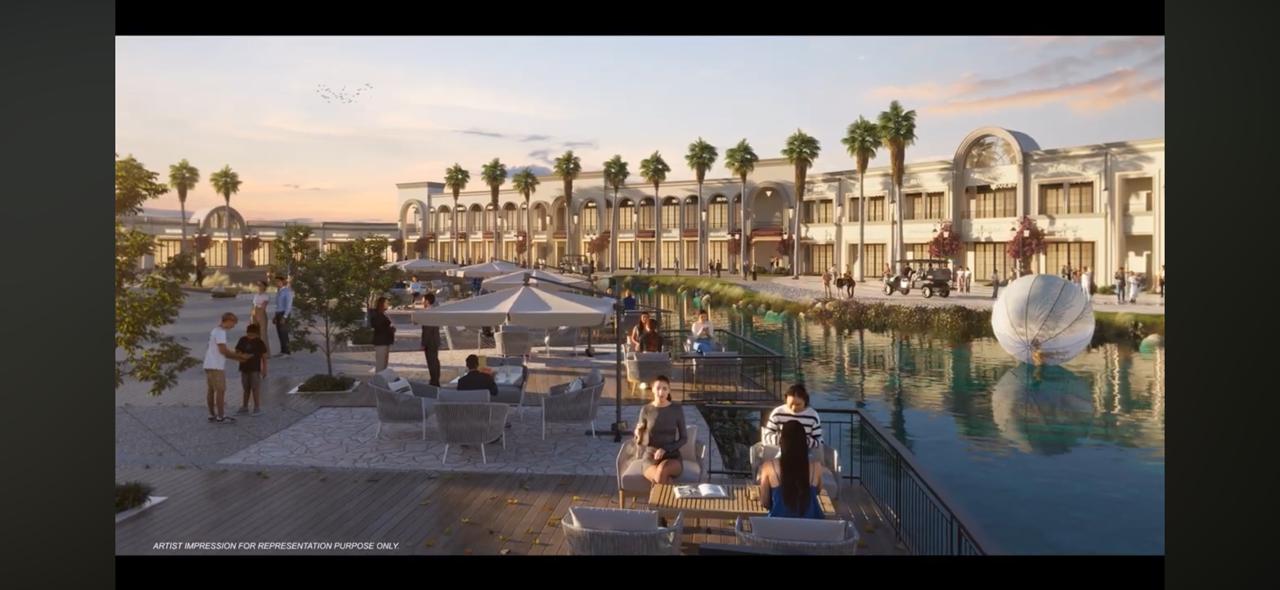
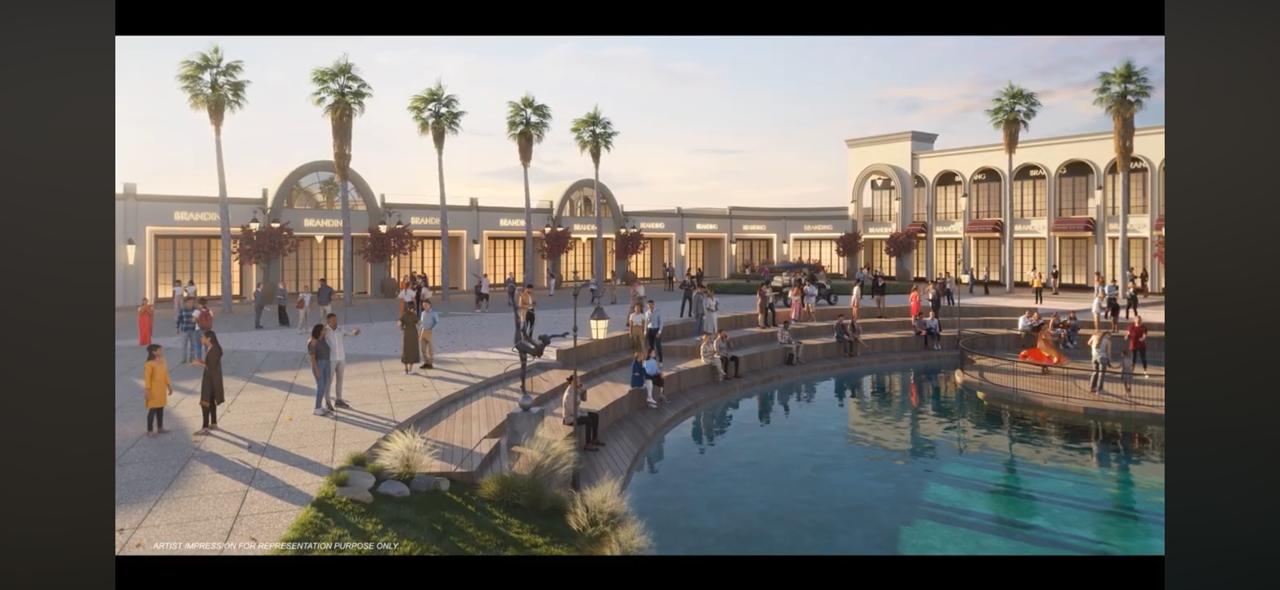
To ground the principles discussed above in a real, current example rather than abstract theory, consider Ananta Karvan — a mixed-use commercial development positioned on NH-21, the Ropar-Manali highway, developed by Ananta Group. This section evaluates it purely against the investment framework covered in this guide, not as a promotional recommendation.
Connectivity
The project sits directly on NH-21, the primary road corridor linking Chandigarh and the wider Tricity region to Himachal Pradesh’s most-visited hill destinations — Manali, Shimla, Kasauli, and Dharamsala. This corridor carries a structural combination of daily local traffic and seasonal tourist traffic, which — per the highway-demand logic discussed earlier — is exactly the kind of organic, non-manufacturable footfall that highway commercial developments are built to capture.
Future Growth Positioning
The site is positioned near Ropar (Rupnagar), a district that has evolved beyond its traditional administrative-town profile with the presence of the IISER Ropar campus and proximity to the Nalagarh industrial cluster — both of which contribute a growing resident and working population to the surrounding catchment, alongside the highway’s tourist traffic.
Commercial Demand & Format
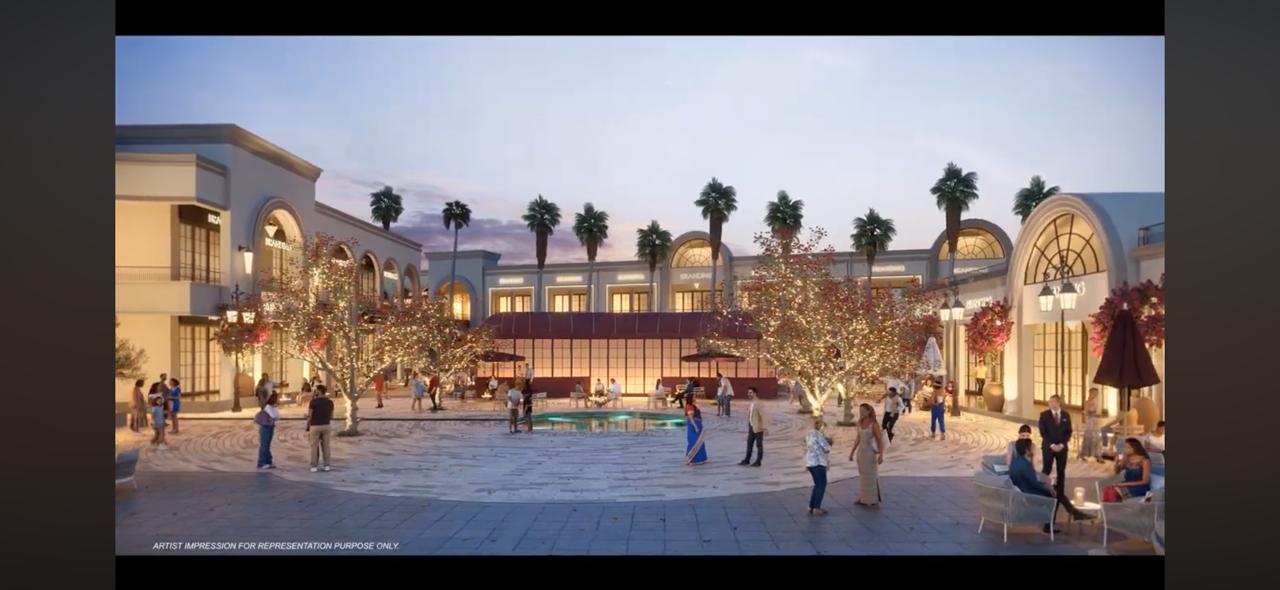
Spread across 11 acres, the project is structured as a mixed-use commercial format — showroom units, food-court spaces, dedicated drive-thru slots, restaurant space, and micro-brewery formats — designed around multiple, complementary footfall drivers (daily commuters, weekend family traffic, and tourist stopovers) rather than a single retail category.
Family Footfall & Retail Potential
Its European-themed design positions it as a destination stop rather than a pure transit halt — aiming to convert passing highway traffic into a planned visit, which is the same strategy national highway retail and F&B chains have used successfully elsewhere in India.
Investment Perspective
The project is structured with a starting investment point of roughly ₹1.25 crore, a 12% per annum assured return commitment from the developer for the pre-possession period, and a 9-year post-possession lease guarantee — a structure squarely aimed at investors seeking a pre-leased-style income profile with reduced early vacancy risk, consistent with the pre-leased investment principles discussed earlier in this guide. As with any assured-return or lease-guarantee commitment, this is a contractual promise from the developer, not a market-tested outcome — buyers should independently review the buyer-developer agreement, verify RERA registration and developer track record, and consult a legal advisor before committing capital.
📄 Download the Ananta Karvan Sales Plan (PDF) for the detailed unit layout, pricing structure, and payment schedule.
Risks Every Commercial Investor Should Understand
| Risk | What It Means | How to Manage It |
|---|---|---|
| Vacancy Risk | Period between tenants where the unit generates no rental income | Prioritise pre-leased or lease-guaranteed structures; verify tenant/guarantor strength |
| Lease Renewal Risk | Uncertainty over renewal terms or rental step-up at lease expiry | Review escalation clauses and renewal terms in the original lease agreement |
| Market Cycles | Broader economic slowdowns affecting retail and business expansion demand | Favour diversified, multi-category footfall drivers over single-tenant dependence |
| Oversupply | Too much competing commercial inventory in the same catchment diluting footfall per unit | Assess total competing supply pipeline, not just the specific project’s own inventory |
| Location Selection | The single biggest driver of long-term commercial outcomes | Independently verify traffic data, catchment growth, and connectivity plans |
| Tenant Mix | Poor tenant mix can undermine footfall synergy across a mixed-use development | Ask for the developer’s tenant/anchor strategy and leasing track record |
| Legal Due Diligence | Title, RERA, and land-use compliance gaps can create long-term complications | Independent legal and RERA verification before any payment beyond token amount |
Investor Checklist Before Buying Any Commercial Property
- RERA registration verified independently on the official state portal
- Developer track record and past project delivery history checked
- Title and land-use (CLU) status independently confirmed
- Traffic and catchment data reviewed, not just the developer’s brochure claims
- Lease/assured-return agreement reviewed clause-by-clause with a lawyer
- Tenant mix and anchor leasing strategy understood for mixed-use projects
- Total competing commercial supply in the same catchment assessed
- Exit/resale liquidity of similar assets in the region researched
- Financing terms, loan-to-value, and EMI serviceability confirmed with your bank
- Realistic holding horizon defined before committing — commercial property rewards patience
Frequently Asked Questions
What is pre-leased commercial property?
Pre-leased commercial property is a unit sold with an existing lease or a contractually structured rental/lease-guarantee arrangement already in place, so the buyer earns rental income from possession rather than searching for a tenant afterward.
Is commercial property a good investment in Punjab in 2026?
Commercial property in Punjab can be a strong investment when location, tenant quality, and documentation are sound. Outcomes vary significantly by micro-market and project, so returns should never be assumed without independent due diligence.
Why are investors looking beyond Mohali and Zirakpur for commercial property?
Mohali and Zirakpur have matured into established commercial hubs with higher entry prices and stronger competition for limited premium inventory. Some investors are diversifying into developing highway corridors where entry costs are lower and growth potential may be higher, without abandoning established markets entirely.
What makes highway commercial property attractive?
Highway commercial property benefits from continuous, high-volume traffic independent of any single neighbourhood’s population, strong visibility, generous parking, and appeal to national retail, F&B, and hospitality brands seeking expansion sites.
What is the typical rental yield on commercial property versus residential?
Well-located commercial property generally commands a meaningfully higher rental yield than residential property in the same city, because business tenants pay a premium for footfall and visibility rather than just living space.
What risks should I check before buying pre-leased commercial property?
Verify the lease tenure, escalation clauses, tenant or guarantor financial strength, RERA registration, title clarity, and what recourse exists if a rental or assured-return commitment is not honoured.
Are assured returns on commercial property guaranteed?
No. Assured returns are a contractual commitment from the developer, not a guaranteed outcome. Always review the buyer-developer agreement with a legal advisor before relying on any assured-return figure.
How does market maturity affect commercial property prices?
As a market matures, entry prices typically rise, competition for premium units increases, and incremental appreciation potential in already-established addresses tends to moderate compared to earlier growth years.
Why do national retail and F&B brands prefer highway locations?
Highway locations offer high visibility, generous parking, access to both local and tourist traffic, and lower-risk expansion sites into new geographies compared with expensive inner-city addresses.
What is the minimum investment for commercial property near Ropar?
Entry points vary by project and unit type. For highway-facing mixed-use developments in the Ropar corridor, starting investments in the ₹1-1.5 crore range are common for showroom or retail units; contact a local consultant for current pricing and availability.
Can NRIs invest in commercial property in Punjab?
Yes. Under FEMA guidelines, NRIs can invest in commercial property in India, including Punjab, typically through remote booking, Power of Attorney documentation, and virtual site visits coordinated by a local consultant.
What is a 9-year lease guarantee and how does it work?
A lease guarantee is a developer’s contractual commitment to ensure the buyer receives rental income for a defined period post-possession, reducing early vacancy risk. It should be reviewed as a legal commitment, with terms verified against the buyer-developer agreement.
Is it better to invest in an established commercial hub or an emerging corridor?
Established hubs generally offer proven footfall and lower execution risk at a higher entry price; emerging corridors can offer lower entry costs and higher growth potential with somewhat higher uncertainty. The right choice depends on your risk appetite and investment horizon.
What documents should I verify before buying commercial property?
RERA registration, title deed and encumbrance status, change-of-land-use (CLU) approval where applicable, the lease or assured-return agreement, and the developer’s project delivery track record.
How does infrastructure investment affect commercial property values?
New roads, industrial parks, educational institutions, and healthcare facilities expand a location’s effective catchment and working population, which over time tends to support both rental demand and capital appreciation.
What is Punjab’s current infrastructure investment outlook?
Punjab’s 2026-27 budget allocated roughly ₹12,597 crore for road development, alongside an active state industrial policy and headline investments including a Mohali-based semiconductor manufacturing project, reflecting sustained infrastructure and industrial momentum.
What is the difference between a growing market and a mature market?
A growing market has infrastructure largely committed but still developing, moderate competition, and balanced risk-return; a mature market has established footfall, higher entry prices, and typically slower incremental appreciation.
Should I visit the site before buying commercial property?
Yes. Independently assessing traffic patterns, construction progress, and the actual scale of a site provides confidence that brochures and renders cannot fully convey.
What is tenant mix and why does it matter in mixed-use commercial projects?
Tenant mix refers to the combination of retail, F&B, and service tenants within a development. A well-planned mix creates footfall synergy — where one tenant’s customers benefit neighbouring businesses — while a poor mix can undermine overall performance.
How liquid is commercial property compared to residential property?
Commercial property resale liquidity varies significantly by location and asset quality. Established, well-tenanted commercial addresses tend to have healthier resale markets than isolated or poorly-leased commercial assets.
What’s the single most important factor in commercial property investment?
Location — specifically traffic, catchment growth, and connectivity — consistently outweighs the specific building or unit finish as the primary driver of long-term commercial real estate performance.
📥 Free Download: Smart Property Investment Guide
Our complete, practical framework for evaluating residential and commercial property across Punjab & the Tricity.
“Commercial investors who do well over a 7-10 year horizon are usually the ones who separate the location decision from the emotional pull of a brochure. Whether that location is an established Mohali sector or a developing highway corridor, the fundamentals you check should be identical: traffic, catchment growth, documentation, and tenant quality.”
Conclusion
Commercial property investment success in Punjab — as in any market — ultimately comes down to a small number of fundamentals: the right location, genuine future infrastructure, credible tenant quality, sustained long-term demand, and thorough professional due diligence. Established hubs like Mohali and Zirakpur remain sound commercial markets with proven footfall, and they will continue to suit investors who prioritise lower execution risk over higher entry cost. At the same time, the market reasoning in this guide explains why a segment of investors — particularly those with a longer horizon and a diversification goal — are also researching developing highway commercial corridors, where entry costs are typically lower and the infrastructure and population growth story is still unfolding.
Projects such as Ananta Karvan, positioned directly on the NH-21 Ropar-Manali highway with a mixed-use format, a pre-leased-style income structure, and proximity to both a growing resident/institutional population and seasonal tourist traffic, illustrate how these investment principles can come together in a specific, real project. Whether a project like this — or any commercial property — fits your own portfolio depends entirely on your risk appetite, investment horizon, and independent verification of the developer’s documentation. We’d encourage every reader to evaluate any commercial investment carefully, seek professional legal and financial advice, and make the decision that genuinely fits your own goals rather than any single recommendation.
Get a Free, Honest Commercial Investment Consultation
Tell us your budget and goals — we’ll respond directly on WhatsApp.
Related Reading on Royals Property Consultant
External Authority Sources Referenced
Need Expert Guidance on Commercial Property in Punjab?
Need expert guidance for buying, selling, or investing in commercial property across Mohali, Zirakpur, Chandigarh, Panchkula, New Chandigarh, and highway corridors like NH-21? Contact Royals Property Consultant for professional assistance and market insights.
📞 Call +91 98787 59508 💬 WhatsApp Nowcommercial Property Punjab, Commercial Property Near Chandigarh, Highway Commercial Property, Commercial Investment Punjab, Commercial Property Appreciation, Commercial Property with Rental Income, Retail Investment Punjab, Best Commercial Property Punjab, Commercial Property Near Ropar, Commercial Real Estate Punjab, Passive Rental Income, Highway Retail Investment, Punjab Commercial Property, Investment Property Punjab, Commercial Property for Investors